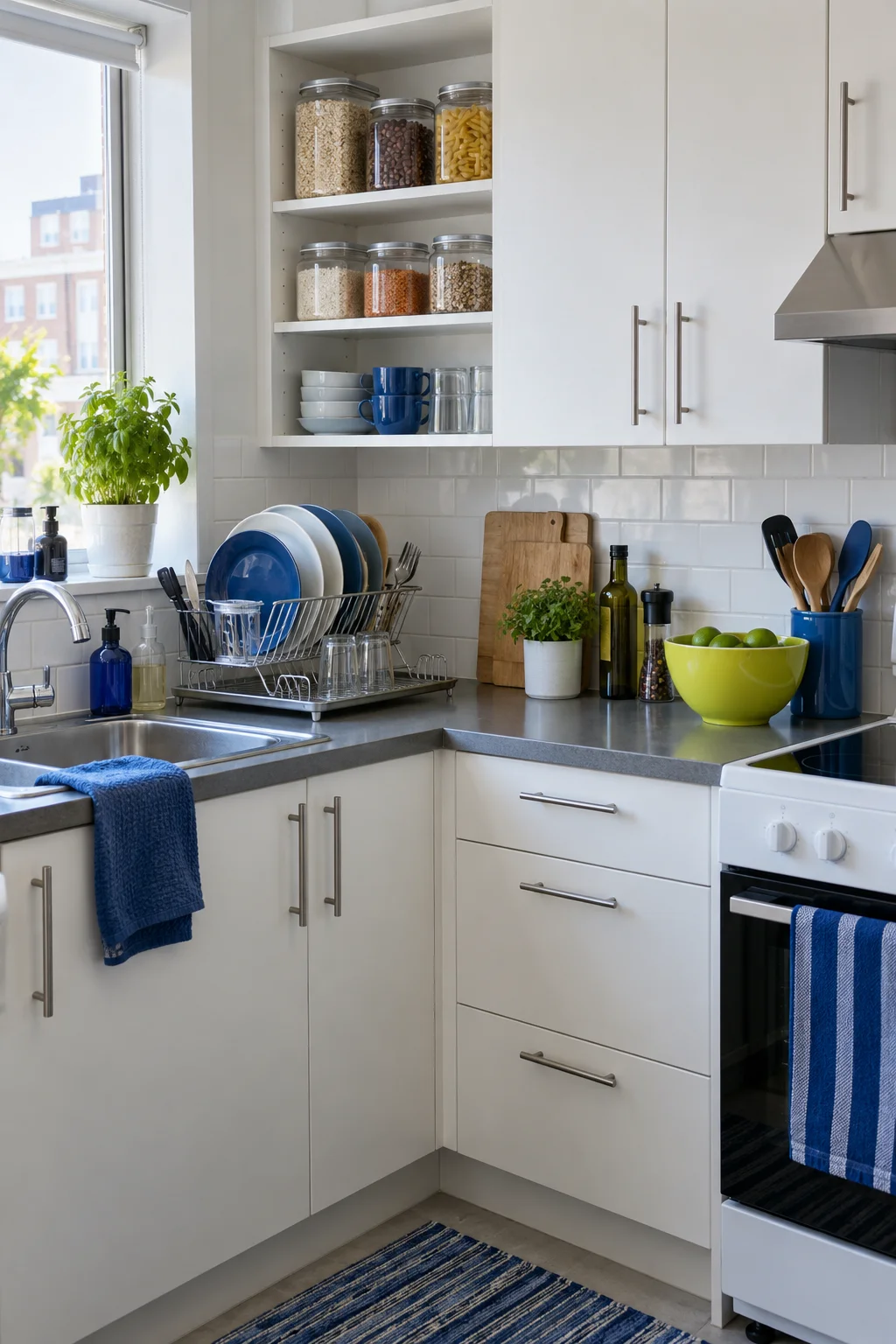
AI-created lifestyle inspiration. This is not a photograph of a recommended product.
The cupboard under a kitchen sink often has less usable room than its doors suggest. Pipes interrupt the shelves, tall bottles compete with the sink bowl and small sponges disappear at the back. Organising it starts with understanding those limits, not ordering a storage unit that looks good in somebody else's kitchen.
Work on one small section at a time and keep cleaning products away from children and pets throughout the process. Follow every product's storage instructions. A tidy cupboard is helpful, but appropriate storage and clear access to plumbing come first.
Empty and inspect the cupboard
Remove the contents carefully and keep products in their original labelled containers. Check for leaks, damp areas, damaged shelves or signs of pests. If something needs repair, address it before adding organisers. In a rental, report relevant maintenance issues through the appropriate channel.
Clean the cupboard using a method suitable for its surface and allow it to dry. Do not cover damp or damaged material with a liner just to improve its appearance. A liner is not a repair and can make it harder to notice a continuing problem.
Sort by the job, not the packaging
Group dishwashing supplies, cloths, spare sponges and other suitable items according to how you use them. Remove empty containers using the disposal directions and local requirements. Avoid combining partly used chemicals, and do not transfer them into unlabelled or decorative bottles.
Check whether every item belongs under the sink at all. Paper products, food and moisture-sensitive belongings may be better elsewhere. Products requiring secure storage need an arrangement that meets those needs, rather than being placed wherever a basket fits.
Measure around the obstacles
Measure the cupboard opening, usable floor area and height below the sink bowl. Record where pipes, hoses, hinges and valves sit. Leave them accessible and avoid placing pressure on them. Measure the route a drawer would travel, not just the empty space where its frame could sit.
Make a paper or cardboard footprint for an organiser before purchasing. Try placing your tallest bottle in the intended position. This simple check often reveals a conflict that the overall cupboard width would not show.
Choose removable groups where practical
A small washable caddy can keep frequently used supplies together and make it easier to inspect the shelf beneath. Check that it is stable and manageable when loaded. A handle does not guarantee that the caddy is comfortable to lift with full bottles inside.
Two smaller groups may work better than one large basket. Keep daily supplies toward the front and suitable spare items behind them. Label the group if different household members need to find and replace things.
Consider a pull-out unit only if it fits
A sliding organiser can improve access in a deep cupboard, but installation, pipe clearance and load capacity need careful checking. Some units require fixing into cabinetry. Confirm permission where necessary and follow the manufacturer's installation instructions.
An expandable shelf is another possibility, although gaps around pipes may leave awkward pockets of space. Avoid buying based on a photograph that shows no plumbing. Your cupboard needs a solution for its actual shape.
Keep damp tools from becoming hidden clutter
Let reusable cleaning cloths and sponges dry appropriately rather than placing wet items inside a closed container. Choose storage that can be cleaned and inspected easily. Separate clean spares from items currently in use so you do not have to guess which is which.
Avoid packing the cupboard so tightly that you cannot see the floor. Being able to spot drips quickly is more useful than filling every centimetre with a basket.
Restock without building a stockpile
Decide how many spare bottles or packs your household genuinely needs. Check existing supplies before adding more to your grocery order. Buying multiples only helps if you have suitable storage and will use the products as intended.
Keep labels facing forward where possible. If something is rarely used, reassess whether it should be stored there rather than automatically purchasing a bigger organiser. The cupboard should support your routine, not become a collection of forgotten supplies.
Make inspection part of the reset
When you replace a sponge or refill supplies, glance at the shelf and pipes for anything unusual. Wipe the removable organiser as needed and return products upright in their designated spots. The goal is a cupboard you can understand at a glance, with useful access and no hidden obstacles when maintenance is needed.
A category to consider
Washable cleaning-supply caddy
A removable group for suitable cleaning supplies, kept in original packaging and stored according to their labels.
- Check before buying
- Loaded weight, handle clearance, washable material and fit around plumbing.
- Potential advantage
- Can make grouped supplies and the shelf underneath easier to access.
- Potential drawback
- Large bottles may make it heavy; a caddy does not provide secure child-resistant storage.
- May suit
- Appropriately stored daily supplies in a dry cupboard with clear plumbing access.
A few useful answers
Will any two-tier organiser fit?
No. Sink bowls, pipes, hinges and the drawer's travel reduce the usable area. Measure all of them before choosing a unit.
What if the cupboard is damp?
Identify and address the cause before adding storage. Report relevant maintenance issues through the appropriate channel in a rental.