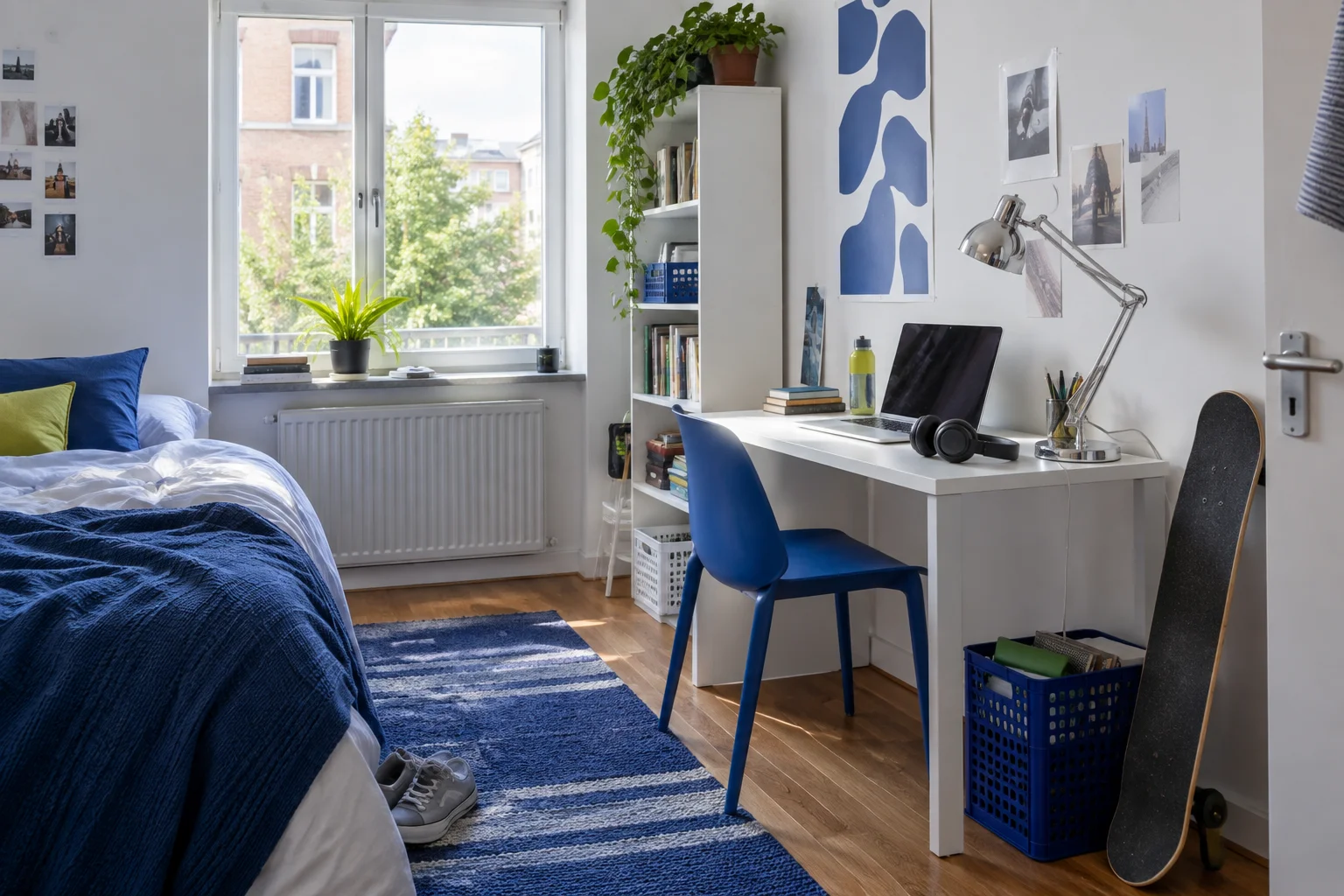
AI-created lifestyle inspiration. This is not a photograph of a recommended product.
When your bedroom is also your study spot and the place you hang out, a pile of clothes can quickly take over the chair, the bedside table and the floor. More storage is not always the first answer. Often, the useful change is giving everyday belongings a place that is easier to use than leaving them out.
Begin with the route from the door to the bed and wardrobe. Clear that path and identify the objects that repeatedly land in it. These ten ideas focus on organising what you already own, with product categories to consider only where a genuine gap remains.
1. Keep the bedside surface selective
Choose the few things you genuinely need within reach at night. A lamp, a book and water may be enough. Move spare toiletries, receipts and unused chargers elsewhere. A bedside drawer is helpful only if you can find things inside it without emptying the contents onto the bed.
2. Give worn-again clothes a home
Clothes that are not ready for washing but are not being put away often create the largest pile. Allocate a small section of hanging space or one dedicated hook, subject to the fixture's instructions. Give the area a clear limit: when it is full, decide what needs washing or returning to the wardrobe.
3. Use under-bed space deliberately
Measure the opening beneath the frame as well as the space under the mattress. Wheels, handles and lids all affect whether a box will fit. Store dry, clean seasonal items and keep the contents easy to identify. Avoid pushing containers against anything that needs ventilation, and inspect occasionally for moisture or dust.
4. Fold drawers so you can see the contents
Try placing suitable folded clothes upright in rows. This makes it easier to identify a shirt without lifting a whole stack. Test the arrangement with your existing drawer before adding dividers. Some fabrics and garments do not hold that shape well; hanging or flat storage may be more practical for them.
5. Reduce the laundry journey
Put the laundry basket where clothes actually come off, provided it does not block circulation or door movement. A narrow basket may work in a corner, but check that you can lift and empty it comfortably. Ventilation and washability matter more than a matching colour when the basket is used every day.
6. Allocate one bag-storage spot
Choose a shelf, suitable hook or accessible cupboard section for your everyday bag. Empty old receipts and food containers before putting it away. Store occasional bags separately so the daily one is not buried. Check any hook's mounting requirements and capacity rather than assuming that all adhesive options can carry a loaded backpack.
7. Make wardrobe shelves easier to use
Group clothes by how you use them: work, study, exercise or weekends. Keep the most-used group easiest to reach. A shelf divider may stop a folded stack falling sideways, but it also uses space. Try shorter stacks first; removing unused garments can solve the same problem without a purchase.
8. Store shoes where they stay contained
Count the pairs you wear regularly, then assign a realistic footprint. A low rack or individual boxes may help, depending on the available space. Check that shoes are clean and dry before enclosing them. Tall boots and bulky trainers need different clearances from sandals, so do not choose a rack using pair counts alone.
9. Keep small objects in small zones
Use a shallow box for jewellery, a pouch for spare cables or a tray inside a drawer for daily essentials. Broad categories work better than elaborate subdivisions that are hard to maintain. Keep valuable items somewhere suitable for your household, and do not let convenient storage replace appropriate security.
10. Plan a short weekly reset
Pick a regular moment to return books, sort laundry and clear the bedside area. A reset should be straightforward enough to do on a busy week. If one category repeatedly overflows, change its allocated space or reduce its contents rather than adding another temporary pile.
Decide what deserves a purchase
Measure before looking at storage products. Check internal dimensions, access space, lid movement and how the item will be cleaned. For a rental, confirm permission for changes and do not assume that a product advertised as removable will leave every surface untouched. Start with one problem area so you can judge whether the change actually helps.
Keep the room easy to live in
An organised bedroom does not need to look empty. The aim is to make dressing, resting and cleaning easier. Choose two ideas to try this week, notice which belongings still lack a home, and adjust those first. A manageable routine usually matters more than another matching container.
A category to consider
Low-profile under-bed storage box
A container for suitable clean, dry seasonal items. Choose a model only after measuring the bed and access route.
- Check before buying
- Overall height including lid and wheels, internal capacity, handle clearance and material care.
- Potential advantage
- Can use space already beneath the bed.
- Potential drawback
- Access can be awkward; the area needs periodic dust and moisture checks.
- May suit
- Occasional bedding or seasonal belongings in an appropriate dry space.
A few useful answers
Where should I begin?
Clear the path between the door, bed and wardrobe, then give the items that were blocking it a practical home.
Can I use these ideas in a rental?
Many rely on rearranging existing belongings. Check your agreement and obtain any necessary permission before fixing, mounting or changing furniture and surfaces.