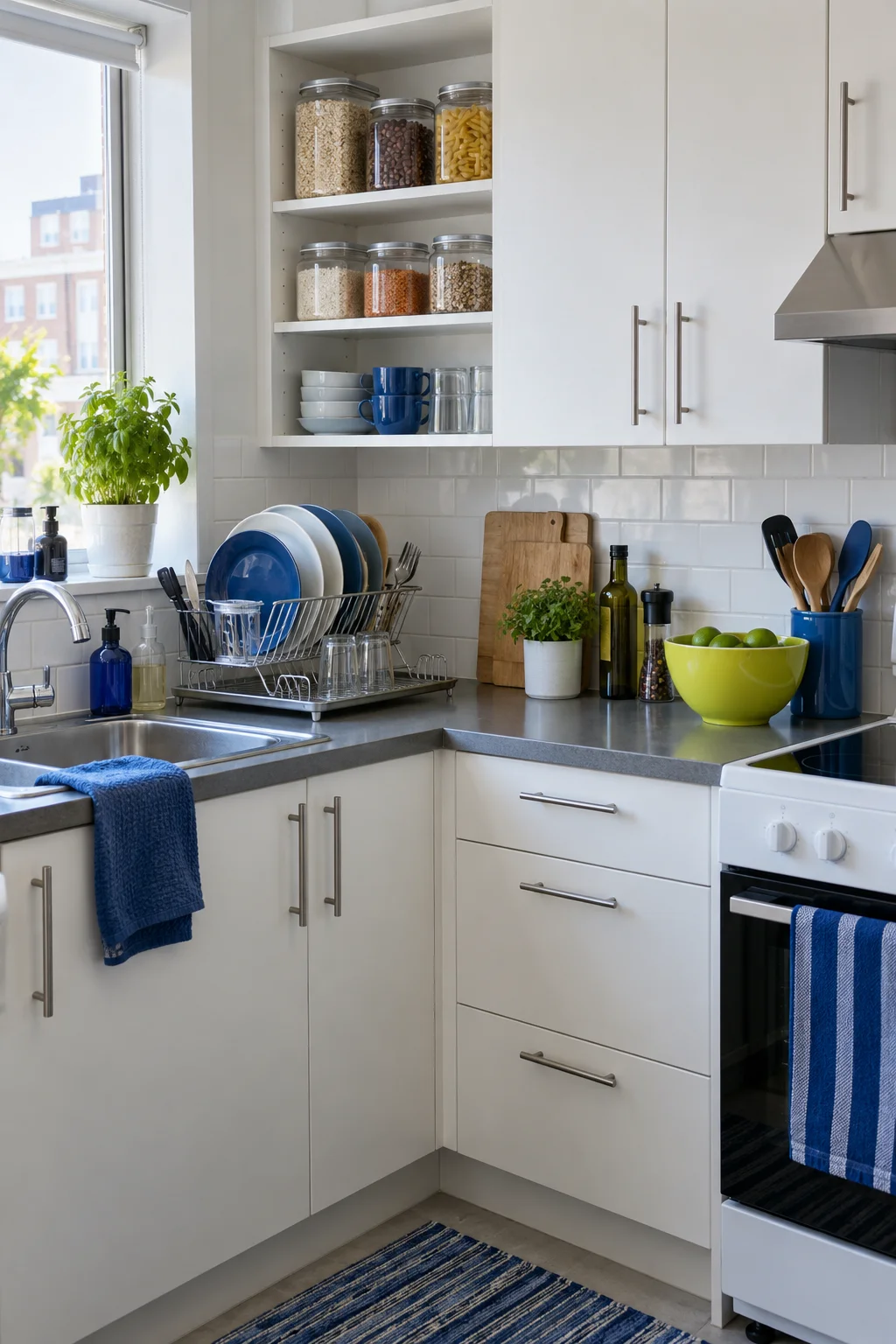
AI-created lifestyle inspiration. This is not a photograph of a recommended product.
A small kitchen works hard. The same bench may be used for unpacking groceries, making breakfast and preparing dinner, so even a useful appliance can become an obstacle. A good organising system starts with how you cook rather than the appearance of the cupboards.
Choose one ordinary meal and follow the steps you take to prepare it. Notice where you repeatedly cross the room, move a stack or search for a utensil. Those interruptions tell you which changes are likely to make a real difference. You do not need to empty every cupboard at once.
Create zones around everyday tasks
Group things near where they are used when the layout allows it. Keep chopping boards and preparation tools convenient to the main working area. Put mugs near the kettle and everyday plates somewhere accessible from the dishwasher or drying area. Maintain safe clearances around heat sources and follow appliance instructions.
A zone is simply a sensible grouping, not a new set of storage products. If two people cook together, leave room for each to access common items without repeatedly blocking the other.
Give yourself a clear preparation area
Remove objects that do not support cooking from the main bench. Start with mail, bags and decorative containers that have become catch-alls. Then consider which appliances you use daily and which can be stored safely elsewhere when cool and dry.
Test the new arrangement for several days before buying anything. If you have to lift a heavy appliance in and out for every meal, the cleared bench may not be worth the inconvenience. Keep regular tools accessible and occasional equipment out of prime space.
Make deep cupboards easier to inspect
Group similar packets in a removable basket so you can bring them forward together. Label broad groups such as baking, breakfast or snacks. Check the cupboard opening and hinges as well as the shelf dimensions; a basket that fits inside may still be awkward to remove.
Avoid making a basket too heavy to lift comfortably. Place frequently used items toward the front, and check behind the group when restocking so older packets are not forgotten.
Use shelf height without creating unstable stacks
A freestanding shelf insert can divide a tall cupboard into two levels. Measure the height of the plates, bowls or mugs that need to fit above and below it. Check the insert's capacity and stability on your actual shelf.
Vertical racks can make boards and suitable trays easier to access, but they also need enough width to prevent everything leaning together. Try rearranging existing shelves first if your cupboard system allows adjustment.
Decant selectively
Clear containers can be useful for frequently used dry ingredients, but transferring every packet creates extra work. Start with one food that is genuinely awkward to store. Choose a container intended for food contact, with a closure and capacity appropriate to its contents.
Keep ingredient, allergen, batch and best-before information where you can refer to it. Avoid mixing new stock into old without checking what remains. Clean and thoroughly dry containers between batches as appropriate, and follow the food's storage instructions.
Give lids their own place
Sort containers with their matching lids before choosing an organiser. Remove damaged or unusable pieces according to local disposal options. A small divider or existing box can keep lids upright if their shapes allow it.
Store only the volume of food containers your household reasonably uses. Large nesting stacks can look compact but become frustrating when you must dismantle them to reach the right size. Put the most frequently used combinations near the front.
Keep cleaning storage separate and practical
Follow cleaning-product labels and store products appropriately for children and pets. Keep them in their original labelled packaging; decorative decanting is not a useful goal here. Under-sink space also needs access to plumbing and should not be treated as unlimited storage.
If you discover moisture, address its source before adding baskets or shelf liners. A tidy cupboard should make a problem easier to see, not cover it up.
Shop from a written gap list
After a week, write down the exact problem that remains and the maximum dimensions of a possible solution. Compare cleaning needs, usable internal space, seller information, delivery charges and returns. Product photographs rarely show how an organiser behaves in a full cupboard, so rely on measurements rather than styling.
Finish with a system you can repeat
Before your next grocery shop, scan the food you already have and return items to their zones. Keep labels broad and routines short. A kitchen that helps you prepare a weekday meal comfortably is doing its job, even if every container is a different colour.
A category to consider
Freestanding cupboard shelf insert
An extra level for a cupboard with unused height. Model suitability depends on the shelf and intended contents.
- Check before buying
- Width, depth, height above and below, stated capacity and stable feet.
- Potential advantage
- May make shorter stacks and everyday items easier to access.
- Potential drawback
- Legs reduce usable space; some shapes fit awkwardly around plates or hinges.
- May suit
- A tall kitchen cupboard with stable shelving and compatible everyday crockery.
A few useful answers
Should I decant every pantry item?
Only if the work is worthwhile for your routine. Start with frequently used dry ingredients and retain important information from the original packaging.
What is the first cupboard to organise?
Choose the one that interrupts an everyday meal. Improving a frequently used cupboard is usually more useful than starting with occasional entertaining supplies.