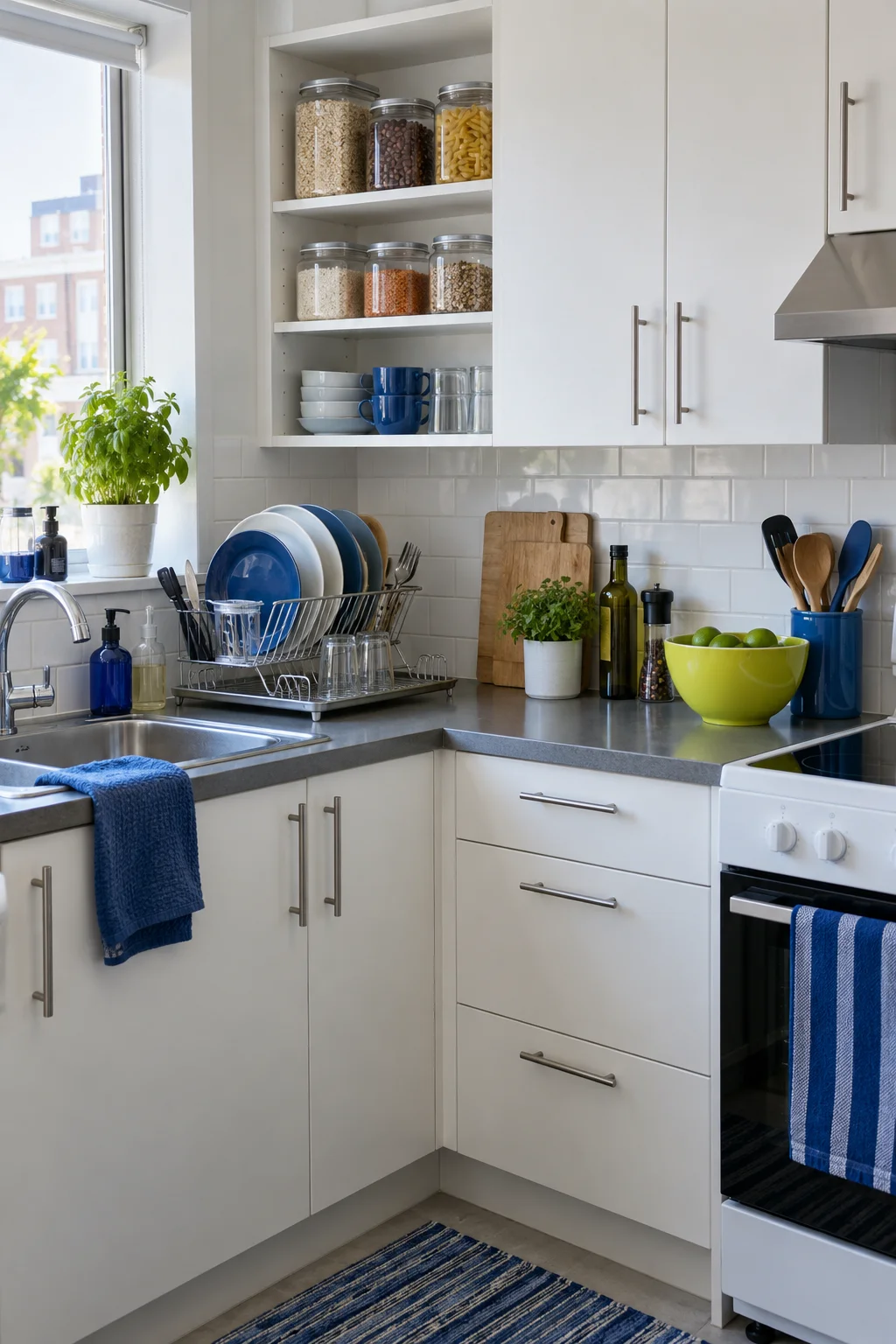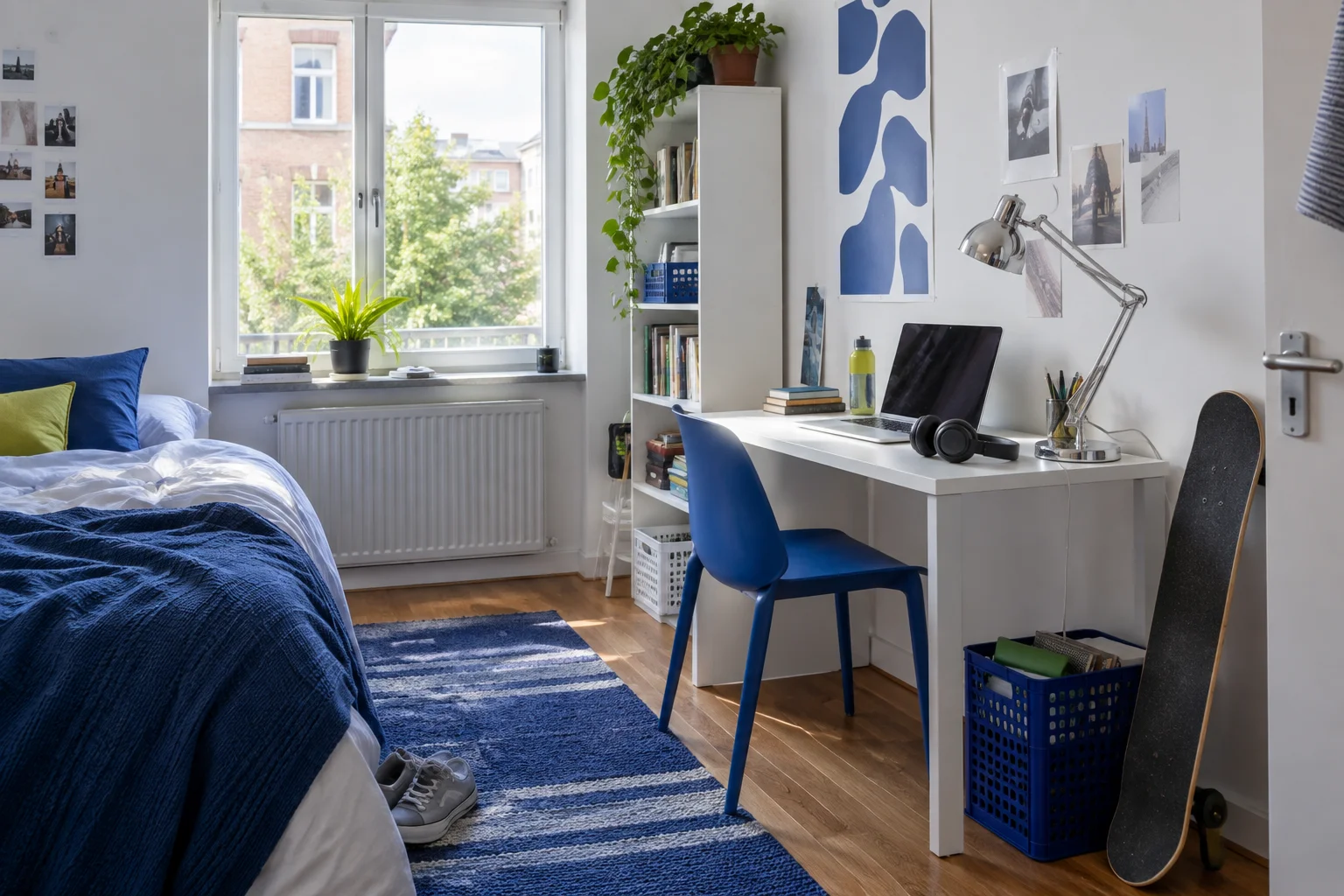
AI-created lifestyle inspiration. This is not a photograph of a recommended product.
A bedroom can feel more spacious without gaining a single square metre. Often, the change comes from clearer sightlines, easier movement and fewer competing objects. The aim is to make the room feel comfortable and usable, not to pretend it is larger than it is.
Before buying décor, stand in the doorway and note what draws your attention. Look at the path beside the bed, the surfaces around the window and the objects that interrupt the room's main lines. Those observations can guide a focused, low-cost refresh.
Clear the route through the room
Start with the movement you repeat every day: entering, reaching the wardrobe and getting into bed. Move loose belongings and check whether furniture prevents doors or drawers from opening comfortably. A room can look tidy yet remain awkward to use.
Try a different arrangement only after measuring the furniture and allowing access around it. Avoid blocking exits, ventilation or required clearances. Taking a few measurements is easier than repeatedly moving a heavy bed to discover that the wardrobe no longer opens.
Reduce the number of competing surfaces
A bedside table, chest of drawers and chair can each become a display area. Choose which surface should hold daily essentials and which should remain mostly clear. Grouping a few useful items can look calmer than spreading many small objects across the room.
This does not mean removing everything personal. Keep the things you enjoy seeing and relocate objects that are there only because they lack a home. Meaningful pieces stand out more when they are not surrounded by unrelated clutter.
Choose furniture by proportion and use
Furniture that is too large can dominate a small room, but undersized pieces may create the need for several additional units. Compare the storage and function of each option with its full footprint. Mark the outline on the floor before buying.
Look beyond width and depth. Drawer travel, handles, bedside access and assembly space all matter. If your existing furniture works well, try reorganising its contents before replacing it with something advertised as space-saving.
Keep the colour story connected
Repeating a few colours across bedding, curtains and accessories can make the room feel more coherent. Use what you already own as the starting point. A neutral base with one or two accents is one option, not a rule that every bedroom must follow.
Consider colours in the room's actual daylight and evening lighting. A paint sample or fabric swatch can look different at home from how it appeared on a screen. In a rental, confirm permission before making permanent changes.
Let the window work for the room
Keep furniture and accumulated belongings from unnecessarily blocking natural light. Choose window coverings with privacy, light control and your household's needs in mind. Follow installation instructions and appropriate safety guidance, including for cords and fittings.
Curtains can provide a continuous visual line, but the right length and mounting depend on the space. Check nearby heaters, openings and other clearances. Do not prioritise the appearance of a photograph over a safe and functional installation.
Use a mirror thoughtfully
A mirror may reflect light or extend a view, but placement matters. Check what it reflects from the doorway and bed. A mirror facing a cluttered shelf simply repeats the clutter, while glare or unwanted reflections can make the room less comfortable.
Choose an appropriate fixing or support and follow the manufacturer's installation instructions. Confirm permission where required. Heavy mirrors and leaning styles need proper consideration of stability rather than being treated as casual decorative objects.
Simplify the bed as the visual centre
The bed occupies a large part of a small bedroom, so its appearance has a strong effect. Bedding that works together and is easy to reset can create a calmer focal point. You do not need a stack of decorative cushions that must be moved every night.
Keep enough bedding for comfort and your climate. Store spare pieces in suitable dry conditions and avoid letting the bed become the default sorting surface for every item that enters the room.
Balance open and closed storage
Closed storage can reduce visible clutter, while a little open space can prevent a room feeling crowded with solid furniture. Choose based on the belongings you need to store and how easily you can maintain the arrangement.
Try clearing one shelf or reducing a display before buying another cabinet. Finish by using the room normally for a week. If movement is easier and returning items takes less effort, the refresh is working, even without a new piece of furniture.
A category to consider
Compact bedside table with a drawer
A bedside storage category for essential objects. Compare proportions and access with your bed and room.
- Check before buying
- Overall size, drawer travel, internal dimensions, stability and installation requirements.
- Potential advantage
- May contain small essentials while keeping the top selective.
- Potential drawback
- A poorly sized unit can obstruct movement; small drawers can become crowded.
- May suit
- A bedroom where the existing bedside arrangement lacks useful contained storage.
A few useful answers
Will a mirror make every room feel larger?
Placement matters. Check the reflection, glare and the room's layout, then use suitable installation and support according to the product instructions.
Do I need to repaint?
No. Clear circulation, more selective surfaces and bedding that works together can change the room without a permanent alteration.