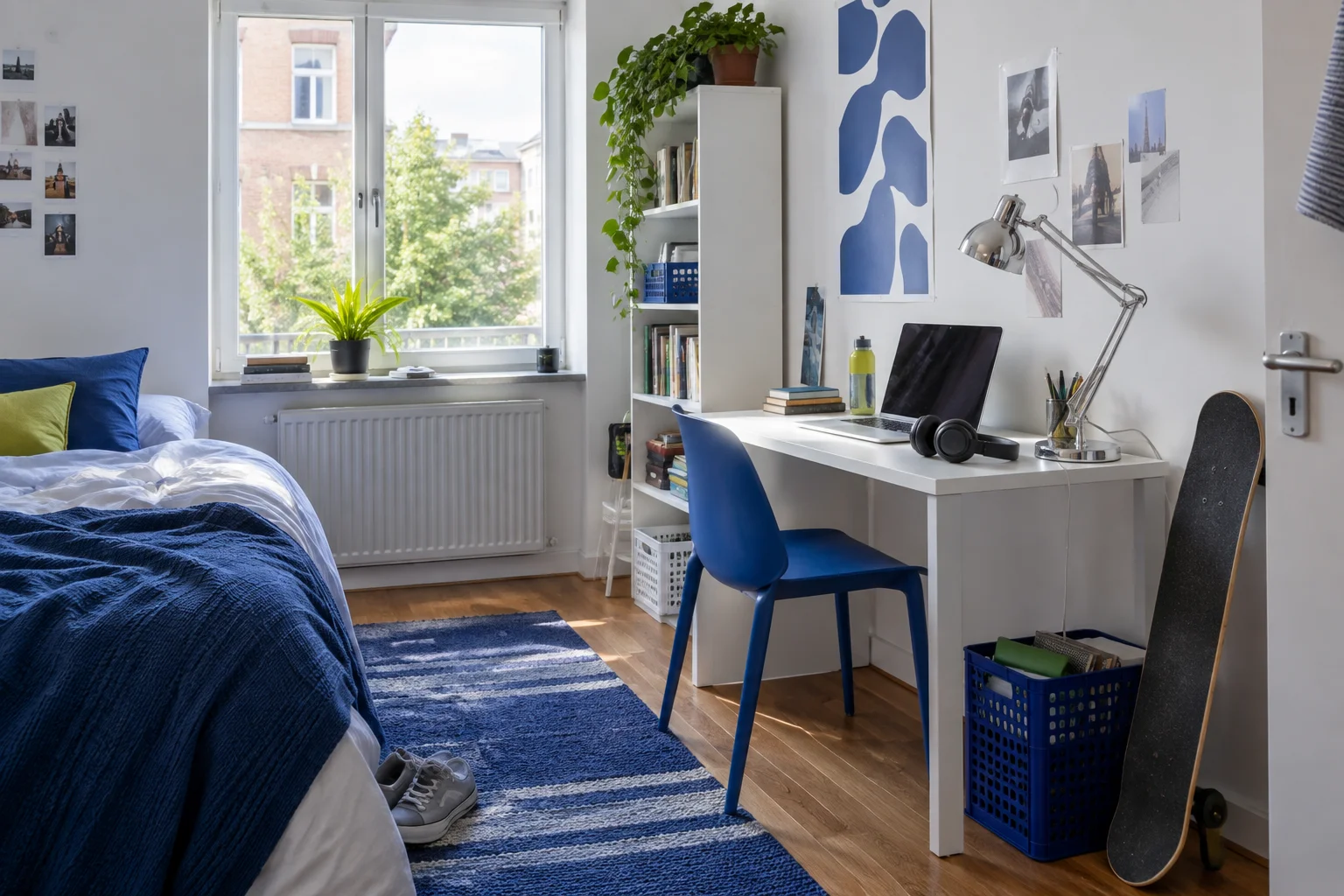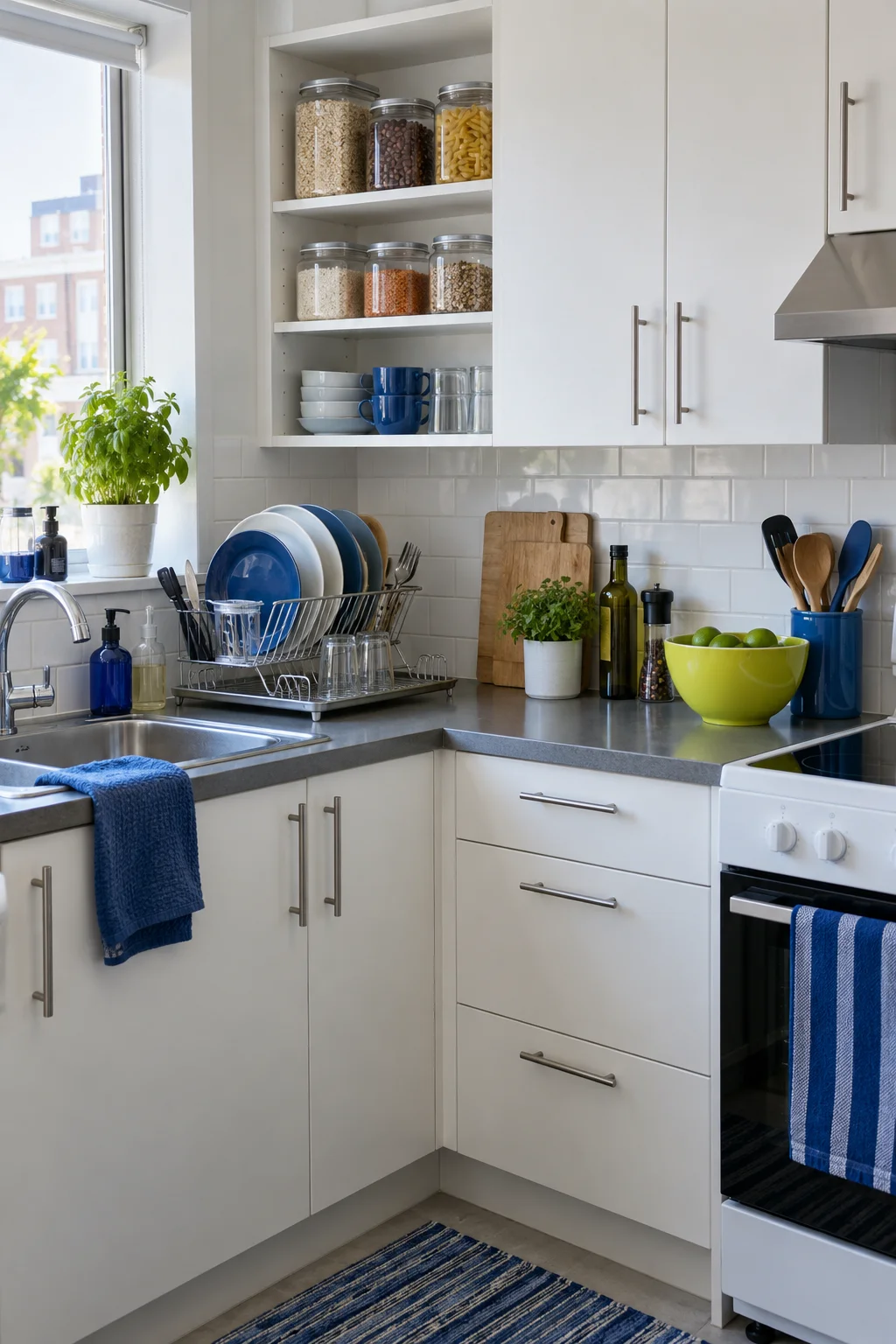
AI-created lifestyle inspiration. This is not a photograph of a recommended product.
Moving out of home or setting up a place with mates can make every household product look essential. The more useful approach is to start with the daily tasks you need to complete, then buy enough to support those tasks. You can fill genuine gaps after living in the space instead of predicting every future need on moving day.
Check what is already supplied and what your housemates own before shopping. Record cupboard sizes, appliance details and available floor space. Keep part of your budget unallocated for the unexpected items that become obvious during the first fortnight.
Start with cleaning basics you will use
Choose tools suited to the apartment's actual surfaces. A floor-cleaning tool needs to work with the flooring and its care instructions, while cloths should be appropriate for the surfaces being cleaned. One versatile, suitable tool can be more practical than several specialised gadgets.
Store cleaning products according to their labels, in original packaging and appropriately secured where children or pets may access them. Plan the storage location before buying a large collection. Avoid purchasing duplicate products just because they are included in a bundle.
Build a modest cooking kit
Think about a few meals you already know how to prepare. List the cookware and utensils those meals require, then check compatibility with the cooktop. A pan, pot, chopping board and basic utensils may cover your starting routine, but the right combination depends on how you cook.
Compare actual sizes with the storage space and cooking surface. A large set is not necessarily good value if half the pieces will remain unused. Follow manufacturer care instructions and check that the materials suit the intended task.
Choose food storage around real leftovers
Buy containers for the portions you normally prepare, not a hypothetical meal-prep routine. Check whether each item is intended for your proposed use, such as refrigeration, freezing or reheating. Similar-looking containers can have different limitations.
Start with a few sizes and see what gets used. Keep lids with their matching containers where practical. Before decanting dry foods, make a plan to retain the ingredient, allergen and date information from the original packaging.
Make laundry possible from day one
Check whether the apartment has a washing machine, shared laundry or a nearby service you plan to use. Choose a basket that fits your route and is comfortable to carry when loaded. A drying rack needs enough open space to be used without blocking access.
Consider ventilation and the conditions in your home. Follow garment-care guidance, and do not assume that every balcony or shared area permits the same drying arrangements. A compact rack is useful only if it accommodates the laundry you actually do.
Set up waste and recycling sensibly
Find out how waste and recycling work in your building and local area. Choose bins that fit the available space and can be emptied and cleaned easily. Check lid movement, liner compatibility and the route to the building's disposal area.
Avoid selecting a bin using capacity alone. A large container may be awkward to carry or encourage keeping waste indoors longer than is useful. Separate categories in a way everyone in the apartment understands.
Keep a small household toolkit
For simple permitted tasks, a basic screwdriver set, measuring tape and other appropriate hand tools may be useful. Buy tools around tasks you understand, and follow instructions. Keep building maintenance and work requiring qualified trades with the appropriate people.
Before assembling furniture, read all instructions and check required fixings and anchoring. For rental modifications, confirm permission and responsibilities first. Owning a tool does not make every repair a suitable do-it-yourself project.
Add an entry system before extra décor
Choose a predictable place for keys, mail and everyday bags. Use an existing bowl or tray initially. The goal is to avoid losing essential items while you are still learning the routines of a new home.
Leave decorative shopping until the practical arrangement settles. Living in the apartment will reveal where lighting, seating or storage could be improved. It is easier to make considered choices when you are not filling every blank corner immediately.
Use a staged buying list
Divide your list into needed now, useful soon and wait. Include delivery costs, assembly, replacement parts where relevant and return conditions. Check whether the retailer delivers to your Australian postcode and how bulky items will reach your apartment.
After two weeks, review what you actually used. Buy the next item to solve an observed problem. A first apartment can feel complete without owning every household accessory; reliable basics and a little room to adapt are a strong start.
A category to consider
Ventilated laundry basket
A basket matched to your laundry route and available space. Consider handling as well as capacity.
- Check before buying
- Loaded carrying comfort, handle shape, footprint, ventilation and cleaning instructions.
- Potential advantage
- Gives laundry a defined place and can simplify carrying it to a machine.
- Potential drawback
- Large capacity can be heavy; narrow shapes may be unstable or hard to empty.
- May suit
- A first apartment needing a practical collection and transport point for laundry.
A few useful answers
Should I buy a complete starter bundle?
Compare the items with the tasks you actually need to do. A bundle is not useful value if it includes equipment you will not use or cannot store.
What can wait until after moving?
Decorative extras and specialist gadgets can often wait until you know how the apartment works. Keep budget available for genuine gaps you discover.